
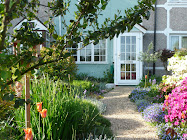
Anyone who enjoys gardens will surely enjoy Colette.
Here is an extract that I've translated from Colette's La Maison de Claudine, Où sont les enfants ?
As usual, first the original text in French followed by my translation into English.
Here is an extract that I've translated from Colette's La Maison de Claudine, Où sont les enfants ?
As usual, first the original text in French followed by my translation into English.
_____________________________________________________________________
OÙ SONT LES ENFANTS ?
La maison était grande, coiffée d'un grenier haut. La pente raide de la rue obligeait les écuries et les remises, les poulaillers, la buanderie, la laiterie, à se blottir en contre-bas tout autour d'une cour fermée.
Accoudée au mur du jardin, je pouvais gratter du doigt le toit du poulailler. Le Jardin-du-Haut commandait un Jardin-du-Bas, potager resserré et chaud, consacré à l'aubergine et au piment, où l'odeur du feuillage de la tomate se mêlait, en juillet, au parfum de l'abricot mûri sur espaliers. Dans le Jardin-du-Haut, deux sapins jumeaux, un noyer dont l'ombre intolérante tuait les fleurs, des roses, des gazons négligés, une tonnelle disloquée… Une forte grille de clôture, au fond, en bordure de la rue des Vignes, eût dû défendre les deux jardins ; mais je n'ai jamais connu cette grille que tordue, arrachée au ciment de son mur, emportée et brandie en l'air par les bras invincibles d'une glycine centenaire…
La façade principale, sur la rue de l'Hospice, était une façade à perron double, noircie, à grandes fenêtres et sans grâces, une maison bourgeoise de vieux village, mais la roide pente de la rue bousculait un peu sa gravité, et son perron boitait, six marches d'un côté, dix de l'autre.
Grande maison grave, revêche avec sa porte à clochette d'orphelinat, son entrée cochère à gros verrou de geôle ancienne, maison qui ne souriait que d'un côté. Son revers, invisible au passant, doré par le soleil, portait manteau de glycine et de bignonier mêlés, lourds à l'armature de fer fatiguée, creusée en son milieu comme un hamac, qui ombrageait une petite terrasse dallée et le seuil du salon… Le reste vaut-il la peine que je le peigne, à l'aide de pauvres mots ? Je n'aiderai personne à contempler ce qui s'attache de splendeur, dans mon souvenir, aux cordons rouges d'une vigne d'automne que ruinait son propre poids, cramponnée, au cours de sa chute, à quelques bras de pin. Ces lilas massifs dont la fleur compacte, bleue dans l'ombre, pourpre au soleil, pourrissait tôt, étouffée par sa propre exubérance, ces lilas morts depuis longtemps ne remonteront pas grâce à moi vers la lumière, ni le terrifiant clair de lune – argent, plomb gris, mercure, facettes d'améthystes coupantes, blessants saphirs aigus –, qui dépendait de certaine vitre bleue, dans le kiosque au fond du jardin.
Maison et jardin vivent encore, je le sais, mais qu'importe si la magie les a quittés, si le secret est perdu qui ouvrait – lumière, odeurs, harmonie d'arbres et d'oiseaux, murmure de voix humaines qu'a déjà suspendu la mort – un monde dont j'ai cessé d'être digne ?…
La maison était grande, coiffée d'un grenier haut. La pente raide de la rue obligeait les écuries et les remises, les poulaillers, la buanderie, la laiterie, à se blottir en contre-bas tout autour d'une cour fermée.
Accoudée au mur du jardin, je pouvais gratter du doigt le toit du poulailler. Le Jardin-du-Haut commandait un Jardin-du-Bas, potager resserré et chaud, consacré à l'aubergine et au piment, où l'odeur du feuillage de la tomate se mêlait, en juillet, au parfum de l'abricot mûri sur espaliers. Dans le Jardin-du-Haut, deux sapins jumeaux, un noyer dont l'ombre intolérante tuait les fleurs, des roses, des gazons négligés, une tonnelle disloquée… Une forte grille de clôture, au fond, en bordure de la rue des Vignes, eût dû défendre les deux jardins ; mais je n'ai jamais connu cette grille que tordue, arrachée au ciment de son mur, emportée et brandie en l'air par les bras invincibles d'une glycine centenaire…
La façade principale, sur la rue de l'Hospice, était une façade à perron double, noircie, à grandes fenêtres et sans grâces, une maison bourgeoise de vieux village, mais la roide pente de la rue bousculait un peu sa gravité, et son perron boitait, six marches d'un côté, dix de l'autre.
Grande maison grave, revêche avec sa porte à clochette d'orphelinat, son entrée cochère à gros verrou de geôle ancienne, maison qui ne souriait que d'un côté. Son revers, invisible au passant, doré par le soleil, portait manteau de glycine et de bignonier mêlés, lourds à l'armature de fer fatiguée, creusée en son milieu comme un hamac, qui ombrageait une petite terrasse dallée et le seuil du salon… Le reste vaut-il la peine que je le peigne, à l'aide de pauvres mots ? Je n'aiderai personne à contempler ce qui s'attache de splendeur, dans mon souvenir, aux cordons rouges d'une vigne d'automne que ruinait son propre poids, cramponnée, au cours de sa chute, à quelques bras de pin. Ces lilas massifs dont la fleur compacte, bleue dans l'ombre, pourpre au soleil, pourrissait tôt, étouffée par sa propre exubérance, ces lilas morts depuis longtemps ne remonteront pas grâce à moi vers la lumière, ni le terrifiant clair de lune – argent, plomb gris, mercure, facettes d'améthystes coupantes, blessants saphirs aigus –, qui dépendait de certaine vitre bleue, dans le kiosque au fond du jardin.
Maison et jardin vivent encore, je le sais, mais qu'importe si la magie les a quittés, si le secret est perdu qui ouvrait – lumière, odeurs, harmonie d'arbres et d'oiseaux, murmure de voix humaines qu'a déjà suspendu la mort – un monde dont j'ai cessé d'être digne ?…
WHERE ARE THE CHILDREN?
Topped with a high attic, it was a big house with stables and outhouses, chicken coops, a washhouse and a dairy that because of the steep slope of the street were forced together in a huddle around an enclosed, lower courtyard.
Leaning against the garden wall, I could scratch the roof of the chicken house with my finger. The upper garden overlooked the lower garden: a narrow and warm kitchen garden set aside for growing aubergines and peppers, where, in July, the smell of tomato leaves mixed with the scent of the apricots ripening on their espaliers. In the upper garden: two twin pines, a walnut tree whose unforgiving shade killed off any flowers, roses, a neglected lawn, a dislocated tunnel… A sturdy iron fence at the bottom of the garden along the length of the rue des Vignes must have once protected the two gardens but I only ever saw the fence twisted and torn from its cement base and brandished in air by the invincible branches of a hundred year old wisteria…
Overlooking the rue de l’Hospice the front of the house was unattractive. Blackened with age, it was adorned with large windows and a stone stairway that led to the front entrance; an old, bourgeois, village house whose serious bearing was eased slightly by the steep slope of the road, which seemed to cause the perron, with 6 steps on one side and 10 on the other, to limp.
Large and austere-looking, with a porch and carriage gate with an enormous old prison latch, it was a house that smiled on one side only: the back where, out of sight of the passer-by, bathed in sunlight, it sported a cloak of wisteria and bignonia that shaded a small, tiled terrace and the door to the living room, a cloak that weighed heavy on the tired iron framework, which had sunk like a hammock in the middle… Is there any point in continuing my description when words alone are not enough? I wont be able to help anyone envisage the splendour that endures in my memory of the red ribbons of the autumn vines collapsing under their own weight, clinging as they fall to some conifer branches. I cannot make the clumps of lilacs - whose compact flowers, blue in the shade, purple in sunlight, quickly fade, suffocated by their own exuberance – I cannot make lilacs that died years ago reach again out towards either the sunlight or the terrifying light of the moon which, as it passed through the blue window lights of the kiosk at the bottom of the garden could turn from silver, lead-grey mercury, to sharp facets of amethysts and sapphir.
The house and garden are still there, I know, so does it matter if the secret ingredient that brought to life a harmony of trees and birds, a murmur of human voices that have already put death on hold, the magic that opened a world of light and smell of which I am no longer worthy, does it matter if this has gone?








 Posts
Posts

